The Chosen One Is Not the Same as the Only One
Chosen-one stories do not require a uniquely capable hero. Learn to distinguish narrative selection from exclusive ability and read what the choice means.
A chosen-one story does not need to make its hero the only person who can act. A chosen character may be selected by a prophecy, an institution, a family, or a chain of events while other people retain the same abilities. The distinction matters: selection tells us why this person occupies the story’s centre; exclusivity tells us who else could do the work.
These conventions are often blurred because a film may present both at once. Separating them makes the plot easier to read and reveals whether the story treats its hero as exceptional, replaceable, or responsible to others.
How does a chosen-one story distinguish selection from ability?
Selection is a relation between a character and a cause: someone or something designates them. Ability is a capacity to act, such as reading an inscription, wielding a tool, making a difficult decision, or enduring a dangerous journey. One does not automatically imply the other.
A story can establish that a character is selected without claiming that nobody else could perform the relevant task. Perhaps a council appoints a messenger because it trusts her judgement, or a prophecy names one person without explaining why. The choice may shape the plot while the necessary skill remains learnable or shared.
By contrast, exclusive ability is a stronger claim. The story may establish that only one person can open a sealed passage, recognise a particular voice, or survive a condition that affects everyone else. Look for evidence in the plot, not just the grand language characters use about destiny.
What can make a character the chosen one?
“Chosen” can describe several different story mechanisms. Identifying the mechanism helps clarify what the selection does and what it does not establish.
- Prophecy: A prediction names, describes, or anticipates a person who will take part in an event. It may explain why characters expect that person to matter, but it does not by itself prove that the person has an exclusive skill or that every predicted detail must happen.
- Appointment: A leader, group, or institution selects someone for a role. The choice can rest on trust, political need, reputation, or availability. Another person might be capable of the same work but lack the appointment, authority, or support.
- Inheritance: A family connection, title, or inherited object places a character in a position others cannot claim in the same way. Inheritance can create a unique legal or social status within the story without making the heir wiser, braver, or more skilled.
- Circumstance: A coincidence or earlier decision brings one person into contact with the central problem. Their place in the plot may be accidental rather than deserved, yet what they do afterwards can still carry moral weight.
- Retrospective recognition: A character becomes “the chosen one” because others interpret past events as signs of a special role. The selection may be a belief held by characters rather than a fact the film confirms.
Ask who is doing the choosing, by what authority, and what the choice permits. Those questions separate a story’s social or supernatural designation from the abilities it actually shows.
Why does the story make this character central?
Being selected gives a film a way to organise attention. The character may become the person through whom the audience encounters a threat, a community, or a moral conflict. That central position is a storytelling function, not proof that nobody else matters or could contribute.
Selection can also create obligation. A person appointed to carry a message may be expected to deliver it; an heir may be asked to answer for a family’s choices. The story can then test whether the character accepts, resists, misunderstands, or changes the role. The interesting question becomes what they do with the position, not whether they were born better than everyone else.
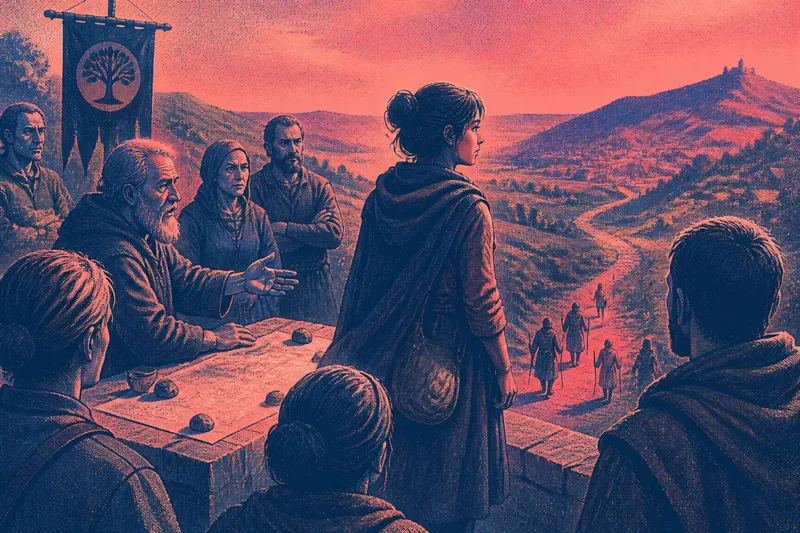
Imagine a film in which a village council chooses Mara to carry a warning to a neighbouring settlement because she has earned its trust. Other villagers know the route and could carry the message, but Mara’s appointment gives her a particular responsibility and makes the council’s confidence part of the conflict. If she hesitates, the tension comes from her response to that trust, not from an ability no one else possesses.
What clues reveal whether the hero is truly unique?
Watch how the film treats alternatives. If another character can use the same skill, take on the same task, or question the same authority, the hero’s role may be selected rather than exclusive. A group’s willingness to help is especially revealing: cooperation suggests that the central figure is not the whole solution.
Pay attention to the difference between what characters say and what events demonstrate. A ruler may insist that one person is indispensable because that belief protects the ruler’s power. The plot may complicate the claim by showing others solving parts of the problem, or by revealing that the supposed sign of destiny has more than one possible meaning.
Also notice what the film treats as unique. A character may be the only recognised heir but not the only competent leader; the only person named in a prophecy but not the only person able to fight; or the first person to act rather than the sole person capable of acting. Specificity prevents “special” from becoming an all-purpose explanation.
What questions help you read a chosen-one story?
Does a prophecy prove the hero is uniquely capable?
No. A prophecy identifies or anticipates a role, but a film must separately establish what the named person can do and whether others could do it too. Treat predictions as claims within the story until events clarify their force.
Can a chosen character refuse the role?
Often, refusal is precisely what makes the role dramatic. The selection may remain in place while the character resists its demands, or the story may show that the role depends on consent, cooperation, or continued trust.
Can several people be chosen for the same task?
Yes. A film can present competing heirs, multiple candidates, or a group appointed to act together. That arrangement shifts attention from solitary destiny towards rivalry, shared responsibility, or the rules by which a community decides whom to trust.
Does a unique gift make the character the chosen one?
Not necessarily. A rare ability can exist without any formal selection, while a selected character may have ordinary skills. Look for the link the story draws between the gift and the character’s role rather than assuming they are the same thing.
What changes when the hero is not the only one?
When others can contribute, the story can make choice more visible. The central figure may need to ask for help, share authority, or accept that a community’s knowledge matters as much as their own. Supporting characters then become participants in the outcome rather than scenery around a singular talent.
This distinction can also sharpen the film’s treatment of power. If a person is selected by an institution, viewers can ask whether the institution’s choice is fair, practical, or self-serving. If the story insists that only one person can act, viewers can ask who benefits from that limitation and whether the plot has earned it.
For a close reading, note the selection mechanism, the abilities actually demonstrated, and the alternatives the film allows. This is a useful way to understand the chosen-one convention: the chosen one is the person the story places in a role, while the only one is a claim about who else could fulfil it.