Screen Presence Without the Big Gesture
Screen presence can come from a held gaze, a quiet shift in posture or a delayed reply. Learn to notice how restrained acting guides your attention.
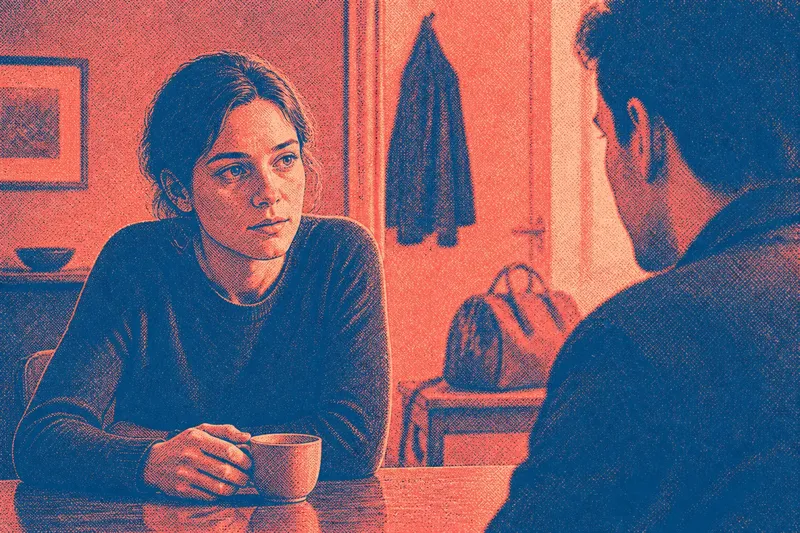
Screen presence does not require a raised voice or a sweeping gesture. In a quiet scene, an actor can hold your attention by choosing where to look, when to move and how to respond; noticing those choices makes restrained acting easier to read.
Try the following approach during a scene built around conversation, waiting or a private decision. It is not a scorecard for deciding whether an actor is good. It is a way to see how small, legible choices shape what the scene feels like.
Where does the scene direct your attention?
Begin by watching the whole frame rather than immediately following the most expressive face. Notice who is positioned in the foreground, who is left at the edge and which objects or doorways remain visible. These details establish the scene’s field of attention before anyone makes a conspicuous move.
Then ask what holds your gaze. It might be an actor’s face, a hand resting beside a cup, or the empty space between two people. A performer’s stillness can become vivid when the rest of the composition gives that stillness room to register.
In a close shot, the camera may make a minute change in focus apparent. In a wider shot, a performer may hold attention by staying present while another character crosses the room. Neither effect belongs to acting alone: framing, editing and performance work together, so look for how the actor’s choices fit the image.
On a first viewing, simply mark the moment your attention shifts. Do not decide yet what the actor means by it.
What does the actor focus on?
Next, track the performer’s gaze. Do they look directly at the person speaking, glance towards an object, or seem to watch a point just beyond the other character? The direction matters because it tells you what the character attends to, even if the script does not spell out a thought.
Focus is not the same as eye contact. A character may listen while looking down, or look at someone without appearing to take in what they say. Compare the gaze with the rest of the face and body: does the attention seem settled, divided or deliberately concealed?
Pay attention to changes rather than treating one look as a code with a fixed meaning. A brief glance towards a coat on a chair could suggest memory, concern, or nothing more than awareness of the room. The scene’s surrounding actions help you judge which reading fits.
Imagine a scene in which one character tells another that a train has been cancelled. The listener looks at the speaker throughout the news, then shifts their gaze to a packed bag by the door. That change gives the bag new weight; it does not, by itself, tell you whether the character feels relief or disappointment.
When does stillness feel active?
Now look for what the actor does while apparently doing nothing. Stillness may involve keeping the shoulders fixed, holding a hand in place or resisting the urge to interrupt. Such restraint becomes readable when a scene gives the character a reason to move, answer or turn away.
Distinguish a deliberate pause from a general lack of movement by noticing its boundaries. What happened just before the pause? Does the actor’s posture change as it continues? Does someone else fill the silence, or does the scene leave it open? Those surrounding events can make quiet behaviour feel like a choice rather than an absence.
Do not assume that a held expression must communicate a hidden emotion. It may show uncertainty, concentration, politeness or a character trying not to react. The useful question is narrower: what does the stillness allow the audience to notice that a faster response might have passed over?
In a conversation, watch the hands as well as the face. A hand that remains around a glass after the other person has finished speaking can extend the pause, while a hand that releases it may signal readiness to answer. Read the action in context instead of assigning it a universal meaning.
How does the response change the exchange?
Listen for the gap between what one character says and what the other does next. The reply might arrive at once, come after a breath, or take the form of a small physical adjustment before any words. Each timing choice affects the exchange.
Compare the response with the offer it follows. A question may be answered with words, a look away, a nod or a refusal to move. The response can accept the other character’s terms, resist them or redirect the conversation without raising its volume.
Notice whether the actor responds to the exact line or to something underneath it. A calm reply to a pointed remark may keep the surface civil while allowing tension to remain visible. Equally, a delayed answer can signal thoughtfulness rather than conflict; the scene’s rhythm and the relationship between the characters help distinguish those possibilities.
For a useful second viewing, watch only the listener while another character speaks. You may see a small reaction begin before the line ends, or discover that the listener’s face changes only after the speaker looks away. That timing can alter how you understand the exchange.
Which performance details are worth tracking?
Once you have watched the scene as a whole, choose a few details to follow. Keeping the focus narrow helps you describe the performance without turning every blink or breath into evidence.
- Gaze: Note where the actor looks before and after a change in the conversation. Ask whether the shift redirects attention or avoids it.
- Stillness: Watch what stays fixed and what changes. Consider whether the actor holds back an available action.
- Timing: Notice a pause, a quick reply or a delayed movement. Relate the timing to the other character’s line or behaviour.
- Posture: Compare the actor’s stance at the start and end of the exchange. A small turn or lean may change how open the character appears.
- Response: Identify what the performer answers, ignores or redirects. Check whether the response is verbal, physical or both.
These are prompts, not a codebook. If a detail does not connect to the scene’s action, let it remain a detail rather than building a larger claim around it.
What should you ask after the scene?
How can I tell restraint from flatness?
Look for selective change: a shift in focus, timing, posture or response that relates to what is happening. If nothing in the performance appears to adjust across the exchange, consider whether the scene is asking for deliberate blankness or whether you simply have too little context to read it.
Does a quiet performance always mean the character is hiding something?
No. Quiet behaviour can express ease, attention, fatigue, caution or social courtesy, among other possibilities. Use the scene’s words, relationships and visible actions to support an interpretation rather than treating restraint as a clue to secrecy.
How do camera and editing affect screen presence?
A close-up can make a slight change in expression easy to see, while a cut can place emphasis on the listener’s reaction instead of the speaker’s delivery. Notice what the image invites you to attend to, then consider how the actor’s timing and movement work within it.
What if I cannot decide what a gesture means?
Keep the observation separate from the interpretation. You can say that a character looks towards the door before answering without deciding that they intend to leave; uncertainty may be the most accurate description of the moment.
How can you put the observations together?
Return to the moment that first held your attention. Describe the visible choice plainly, then connect it to the exchange: what came before, what the actor did, and how the other character or the scene responded. This keeps your reading grounded without pretending that a small gesture has only one meaning.
Say you notice a character pause before replying to an apology, keep their eyes on the speaker, then turn slightly towards the window. You might describe the sequence as sustained attention followed by a delayed, partial withdrawal. That account is observable; whether the character accepts the apology remains open to the rest of the scene.
Screen presence is often clearest when the actor makes a small choice easy to follow without making it easy to explain away. On your next viewing, choose one gaze shift, pause or change in posture and ask what it does to the exchange. That gives you a precise way to discuss restrained acting while leaving room for the film’s ambiguity.