How Film Genre Labels Help You Read a Story
Film genre labels become more useful when you connect them to story, tone and audience expectations, giving you a clearer way to describe hybrids.
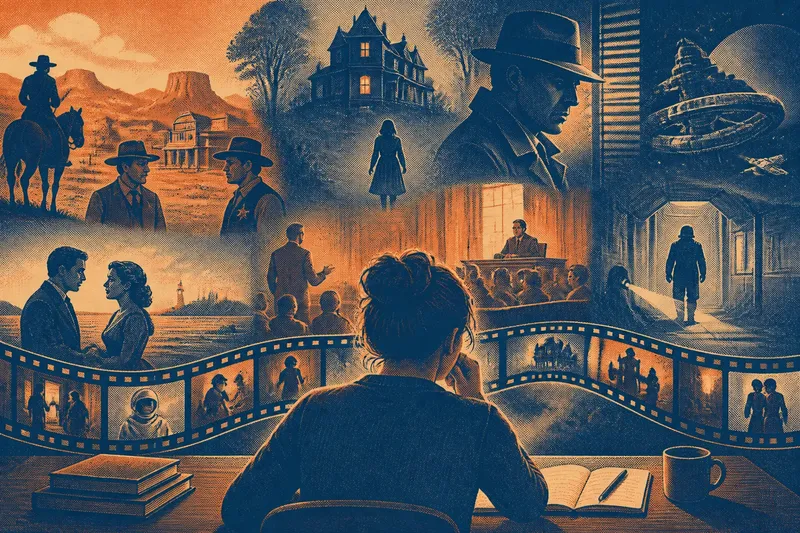
Film genre labels are most useful when they explain what a story is doing, not when they act as a pass-or-fail test. A film set in a frontier town may evoke a western through disputes over law and belonging, even if it avoids the familiar horseback chase.
To describe a genre, look at how the film combines its plot, characters, mood and style. That approach lets you name a strong influence without claiming that one convention defines the whole work.
What does a genre label tell you?
A genre label gives viewers a starting point for understanding a film’s patterns and likely pleasures. Calling a story a mystery suggests that clues and questions will matter; calling it a comedy suggests that humour will shape how events are presented.
These labels describe expectations, not promises. A film can invite viewers to anticipate a familiar kind of story and then complicate that expectation through an unusual character, tone or ending.
When discussing a film, state what the label helps you notice. “A mystery built around missing evidence” is more informative than “a mystery” alone.
Which features make a film feel like a genre?
Genre recognition usually comes from the interaction of several features. Consider the parts of the film that shape its story and viewing experience:
- Setting: a courtroom, isolated house, frontier settlement or spacecraft.
- Story pattern: an investigation, pursuit, survival ordeal, courtship or struggle against authority.
- Character roles: a detective, outsider, rival, monster, mentor or reluctant hero.
- Tone: dread, suspense, wonder, comedy, melancholy or romance.
- Style: stark shadows, open landscapes, abrupt silences or an imposing score.
- Audience expectations: the kinds of tension, surprise or emotional resolution the film encourages viewers to anticipate.
No single feature settles the question. A haunted house may suggest horror, while a playful tone and a family-centred plot make comedy or drama relevant too.
How can you describe a genre hybrid?
Start with the tradition that best explains the film’s main story, then identify what another tradition contributes. “A courtroom drama shaped by political-thriller suspense” tells a reader both where the action is centred and what gives it tension.
Imagine an invented film about a detective following clues to a disappearance aboard a remote space station. The investigation makes mystery a useful label; the station’s technology and setting make science fiction relevant. If suspicion and confinement intensify the danger, calling it a science-fiction mystery with thriller elements conveys more than choosing a single category.
Use a qualifying phrase when a film borrows a genre’s style or mood but not its typical story. “Noir-influenced” can describe distrustful characters or stark lighting without suggesting that the film follows a conventional crime plot.
What should you do when a film breaks a convention?
First identify the expectation the film has raised. Then describe whether it delays, reverses, jokes about or removes that convention, and explain what the change does to the story.
A monster film that keeps its creature off-screen can still draw on horror if it builds dread around a threat and the characters’ vulnerability. The missing image may make the danger harder to judge, rather than making the film unrelated to horror.
Compare the departure with the film’s other features. A frontier landscape by itself may be a passing allusion; recurring disputes over law, territory and belonging make a western description more persuasive.
Which questions help you choose a genre label?
Does a film need a typical setting to belong to a genre?
No. Setting is one clue among several. A horror story can take place in an ordinary neighbourhood if threat, vulnerability and dread organise the scenes.
Should plot or tone guide the label?
Let the feature that best explains the film’s structure lead. An investigation may make a mystery label useful, while tone and visual style may support a noir qualification.
How many genre labels should you use?
Use the fewest labels that make the film clearer. One main label and a specific qualification usually communicate more than a long list of possible influences.
Why might viewers disagree about a film’s genre?
Viewers may give different weight to plot, tone or style, and may bring different expectations to the same convention. Naming the features behind your label makes the disagreement easier to discuss.
How can you make a genre description more precise?
Before settling on a label, check what the film repeatedly asks the audience to follow or feel. Look for a story pattern, a recurring character role, a distinctive mood and the expectations those features create.
- Observe the main story pattern: if an investigation organises the events, use a mystery or crime label; if it appears only briefly, describe it as a subplot instead.
- Observe the dominant setting: if the setting repeatedly shapes the conflict, mention it as a genre clue; if it serves only as scenery, avoid letting it decide the label.
- Observe the character’s role: if a detective, outsider or monster drives the action, name that role; if the character is incidental, focus on the film’s central conflict.
- Observe the tone across scenes: if dread or comedy consistently shapes the experience, include it; if the tone shifts briefly, describe the shift rather than assigning the whole film that mood.
- Observe the visual and sound choices: if shadows, silence or expansive landscapes recur and affect the mood, describe that style; if they appear once, treat them as a local effect.
- Observe the audience expectation: if the film repeatedly raises questions about clues, danger or a relationship, connect the label to that expectation; if it does not, choose a label that better explains what viewers are asked to anticipate.
Say you are describing an invented film about a missing violin in a quiet hotel. The story follows a caretaker checking rooms and comparing guests’ accounts, while the lighting is restrained and the mood uneasy. You decide that “mystery” best describes the investigation; “thriller” would overstate the danger, and “noir-influenced” can describe the lighting and mistrust without becoming the main genre label.
Film genre labels work best when they point to observable choices and explain their effect. State the strongest fit, then name the feature that complicates it; that qualification gives readers a clearer sense of the film than a label on its own.