A Rewatch Built Around the First Appearance of a Place
Track a film location from its first appearance to its return, and see how framing, sound and character choices change what the place suggests.
A film location becomes more revealing when you compare its first appearance with a later return. Choose a kitchen, station or corridor that recurs, then track how the film’s use of it changes—not to solve the plot, but to see how a setting shapes what a scene suggests.
Begin with what is plainly visible: entrances, furniture, light and where people stand. Later, compare the camera’s position, the sounds and the characters’ behaviour. This keeps observation distinct from interpretation, so a location’s possible meaning grows from details on screen rather than from guesswork.
What does the first appearance establish?
The first clear scene in a location gives you a point of comparison, not a permanent definition. Notice whether the film presents the whole space or only part of it, whether characters move freely, and whether the sound feels open, quiet or crowded.
Write down a few concrete details. “The front door stays in frame” gives you something to compare with a later scene; “the room is symbolic” does not yet explain what the film has shown.
Which details matter on a return?
On later visits, focus on a small set of changes rather than cataloguing everything. The same room may feel different because a character stands apart, a doorway is excluded from the frame, or an ordinary background sound is missing.
- Framing: If the whole room is visible again, compare who occupies it; if the frame is tighter, note what the film has left outside it.
- Movement: If characters cross the space freely, record their route; if they stop or avoid an area, compare that behaviour with the first visit.
- Sound: If a familiar hum or traffic noise continues, note the sense of continuity; if it is absent, consider whether the scene feels quieter or more exposed.
- Light and colour: If the same surfaces are clearly lit, compare their effect with the earlier scene; if they are shadowed or obscured, note what remains difficult to see.
- Who is present: If the same people return, compare their positions and interactions; if someone is absent, note whether the scene draws attention to the empty place.
- Duration: If the film stays in the location, note what the longer scene lets you observe; if it cuts away quickly, decide whether the brief return offers a useful contrast or too little to interpret.
These checks help separate a change in the location’s presentation from a change in your own response. Keep interpretations provisional: one altered detail can support several readings.
How can you compare two visits without losing the detail?
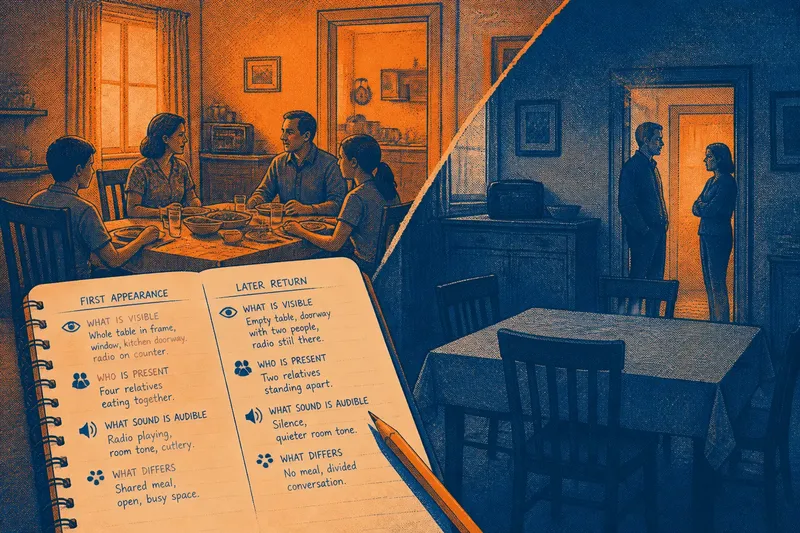
Use a short note for each appearance with four prompts: what is visible, who is present, what sound is audible, and what differs from the previous scene. A notebook or notes app is enough; record observations first and add an interpretation afterwards.
Say you choose a family dining room. At the first appearance, the whole table is in frame and four relatives are eating while a radio plays. On a later visit, two relatives stand by the doorway, the table is empty and the radio is silent. Your notes now support a specific comparison: the room’s shared meal has given way to a divided conversation, though the scenes alone do not prove why the family changed.
How do framing, sound and character behaviour affect a place?
Framing controls which parts of a location the audience can inspect. A doorway held in view may make an entrance feel available; a tight shot that excludes it may focus attention on a character’s face instead. Neither choice has a fixed meaning, so compare it with what the scene asks you to watch.
Sound can connect separate visits or set them apart. A recurring room tone—the low background sound of a space—may make two scenes feel continuous, while a change in music or ambient noise can shift their mood. Character behaviour adds another layer: a person who once entered easily may later hesitate, but the performance and surrounding action matter as much as the setting.
What questions help you track a recurring film location?
Does the first appearance define the location?
It establishes an initial impression, but later scenes can revise it. Treat that first visit as a baseline for comparison, not an explanation of every return.
Is a brief return worth noting?
It can be, if the location is recognisable and the scene changes how it is presented. A glimpse with no meaningful contrast may offer too little to interpret, so leave it out of detailed notes.
What if I cannot remember an earlier scene?
Pause after a clear appearance and write down what you observe. If your viewing setup allows it, revisit the scene and separate visible details from your later interpretation.
Can the same place suggest different things?
Yes. One character may experience a room as safe while another finds it restrictive, and a later scene may change those impressions. Look for the framing, sound and behaviour that support each reading.
How should you choose a focus for the rewatch?
Pick the detail you naturally notice first. If you attend to composition, compare what is included in the frame; if you register atmosphere, listen for changes in sound; if character relationships hold your attention, track who occupies the space and how they move through it.
For a rewatch of a film location, one main focus is usually enough. At the end, compare your note from the first appearance with the last return: the contrast can show whether the shift came chiefly from framing, sound or the characters’ changed behaviour.